Introduction
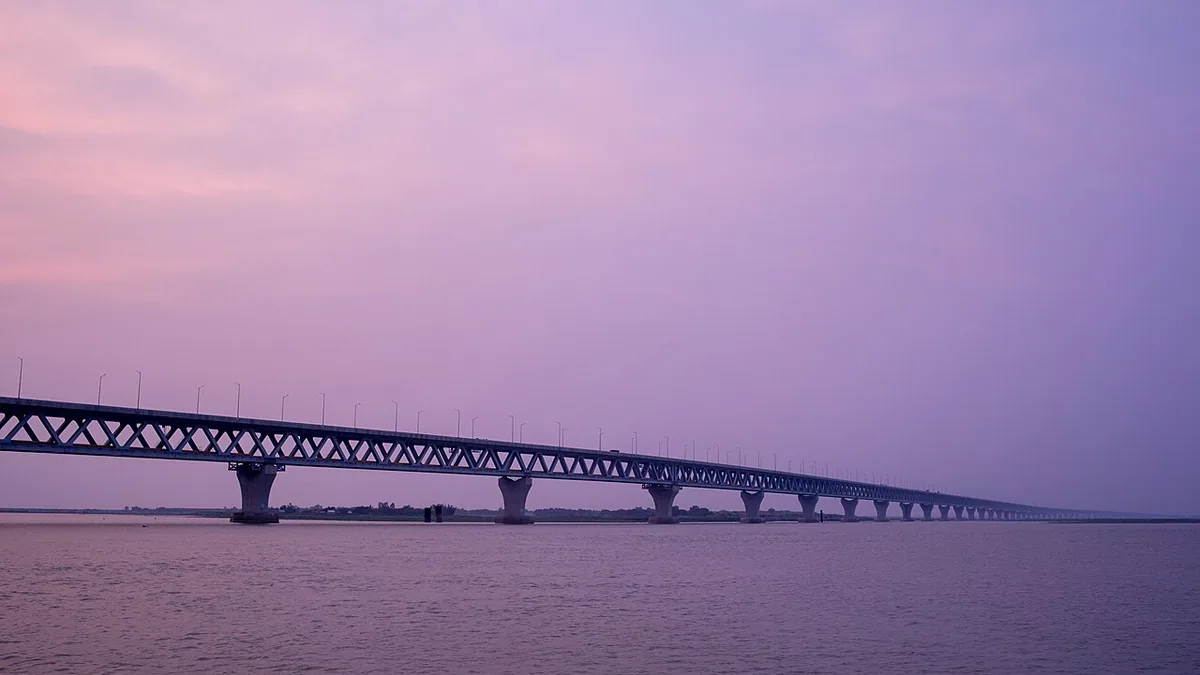
The Padma Multipurpose Bridge is the longest and most challenging infrastructure project in the history of Bangladesh. Spanning the Padma River, this two-level road-rail bridge connects the less developed southwestern region of the country with the northern and eastern regions.
Design and Structure
The bridge has a total length of 6.15 kilometres. It connects Louhajang Upazila in Munshiganj with Zazira Upazila in Shariatpur and a small part of Shibchar Upazila in Madaripur. The upper level carries a four-lane highway, while the lower level features a single-track railway. It comprises 41 sections and boasts some of the deepest pile depths of any bridge globally.
History and Funding
The concept of building a bridge across the Padma River dates back to early feasibility studies in 1971. After various planning stages, political transitions, and the withdrawal of initial international donor funding, the government of Bangladesh ultimately decided to fund the project directly from the national budget. The construction was carried out by the China Major Bridge Engineering Company.
Opening and Connectivity
The bridge was officially inaugurated on 25 June 2022. It significantly reduces travel time between the capital and the southern districts, creating a seamless transport network supported by ancillary infrastructure projects.
Economic Impact
The Padma Bridge is expected to substantially boost the gross domestic product of Bangladesh. It directly links several southwestern districts with above-average poverty rates to major economic hubs, fostering industrial growth, trade, and regional development.
Key Facts
- Length: 6.15 km
- Inauguration Date: 25 June 2022
- Structure: Two-tier steel truss bridge with a highway on top and rail line below
- Location: Connecting Munshiganj to Shariatpur and Madaripur