What the Jatiya Sangsad is
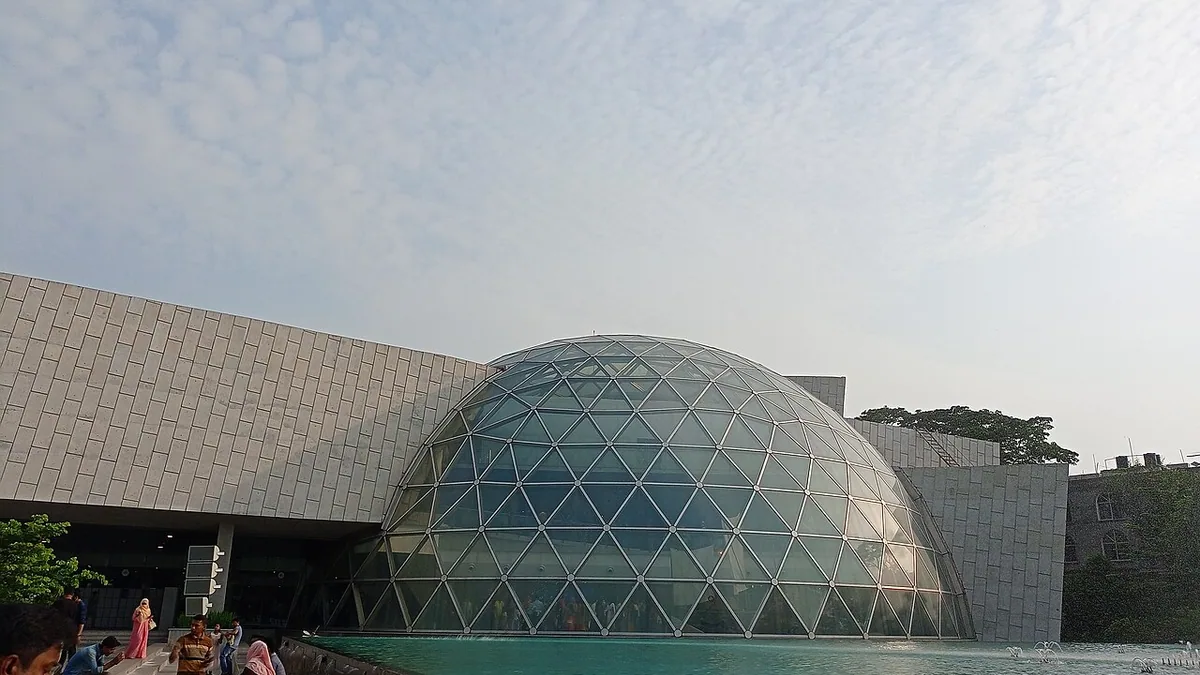
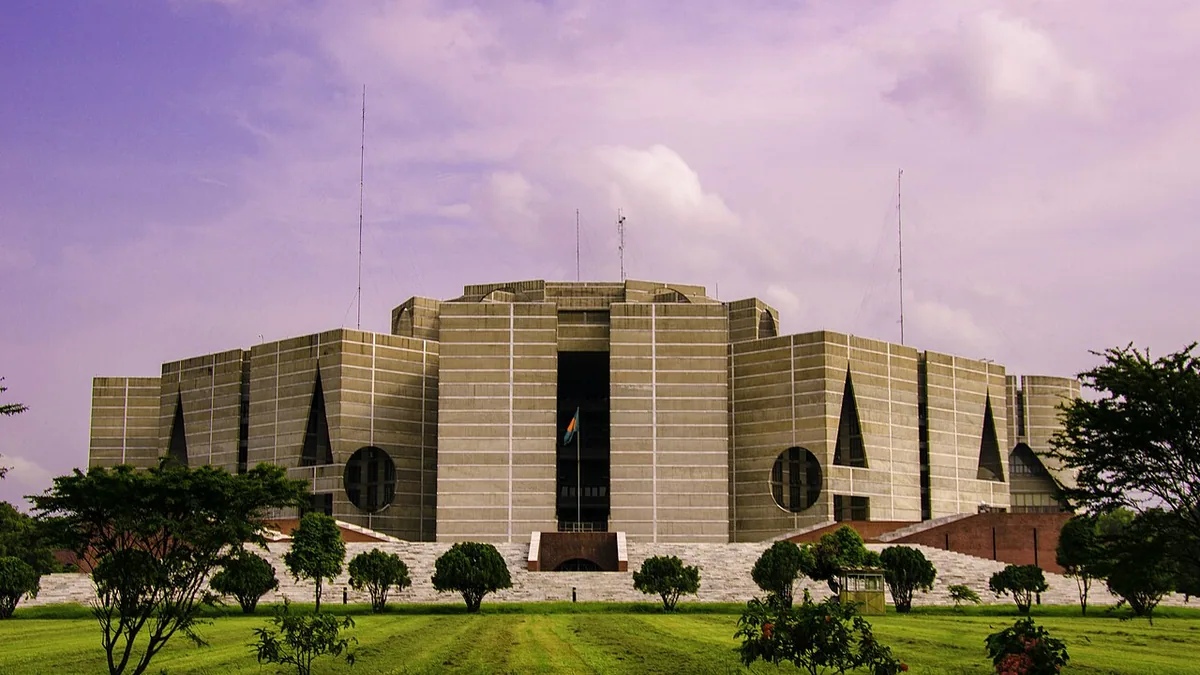
The Jatiya Sangsad — National Parliament, called the House of the Nation in the constitution's English wording and known internationally as Bangladesh Parliament — is the country's single-chamber legislature. It meets in Jatiya Sangsad Bhaban in Sher-e-Bangla Nagar, Dhaka. It has 350 seats: 300 filled by direct election and 50 reserved for women. Members are known as MPs and are entitled to the title "Honourable". Elections are normally held every five years, unless the president dissolves the House sooner.
Background in brief
After independence, a Constituent Assembly was formed on 10 April 1972 and served as the country's first parliament. It approved the constitution on 4 November 1972, and the constitution took effect on 16 December, Victory Day. The Assembly then acted as a provisional parliament until the first election under the new constitution, held in 1973. Until 10 July 1981, the Constituent Assembly and the first and second Sang sads sat in the building now used as the Prime Minister's Office, known as the Old Sangsad Bhaban. The present parliament building was inaugurated on 15 February 1982, and the second Sangsad's last session was held there the same day.
How the House is organised
The Speaker presides over sittings, with the Deputy Speaker taking over in his or her absence. A House Committee made up of the Speaker, the Deputy Speaker and the whips acts as the coordination point: it shapes the day-to-day legislative agenda and assigns committee chairs according to the strength of each party group. The Parliament Secretariat, led by a senior secretary, keeps records of members' votes and speeches and handles protocol, clerical and information work.
Party groups are the building blocks. The government side is led by the Leader of the House — usually the prime minister — supported by a Deputy Leader and a Chief Whip, who in turn is assisted by six additional whips. The official opposition has its own leader, deputy leader and chief whip. Whips are responsible for their party's discipline and the conduct of its members on the floor.
Where the work really happens: committees
Most legislative work is done in standing committees, which last through a parliamentary term. The Committees on Ministry are set up under the House's standing orders, and their number and titles broadly mirror the ministries — defence, agriculture, labour and so on. Others include committees on government accounts, estimates, government assurances, public undertakings, privileges, petitions, private members' bills, the rules of procedure and the library. As of the 2014–2019 parliament there were 50 standing committees. The distribution of chairs and members reflects the relative strength of the party groups.
How a law is made
Broadly, a bill is first introduced, usually by the relevant minister, though a private member may also bring one. It then goes to the standing committee concerned for detailed scrutiny, which may recommend amendments. After that comes a general debate and a clause-by-clause discussion in the House, and finally a vote, usually by voice, where a majority carries the bill. The president's assent then turns it into law. Article 78 of the constitution gives members immunity for their speeches, actions and votes inside the House, so these cannot be questioned in court.
The opposition, Article 70 and the scrutiny debate
The leader of the party or coalition with a majority of seats becomes prime minister and head of government; the largest remaining group forms the official opposition. The president, the ceremonial head of state, is elected by the House through open ballot voting and can be impeached by a two-thirds majority. Because the ballot is open, the opposition seldom nominates a candidate and the governing party's nominee is usually returned unopposed.
Article 70 of the constitution bars an MP from voting against the party or switching sides; an MP who does so loses the seat. In practice this means members rarely break with their party's whip. Political scientists, judges, public intellectuals, newspapers and civil rights activists — and many MPs themselves — have called for the article to be reformed. Critics argue it limits freedom of speech and conscience and weakens checks on the prime minister; some commentators have gone further and described the House as a rubber stamp. Critics have also questioned how much real power committees carry, noting that senior civil servants are rarely brought before them and that the Supreme Court has ruled on whether it can be summoned by a committee. These are assessments made by critics, and the case for strict party discipline is also part of the debate.
Why it matters for people in Bangladesh
Nearly every law that shapes daily life — taxation, education, health, labour, digital policy — passes through this chamber, and the annual budget is approved here. The cabinet is answerable to the House and the president. Under the constitution the prime minister must be an MP, and at least 90 percent of ministers must be members too; the president appoints the cabinet. For citizens, MPs are the main route by which a local grievance or a policy demand reaches the national stage. To follow the parties and figures whose numbers sit in the House, see our profiles of the Bangladesh Nationalist Party (BNP) and of Tarique Rahman.
Key facts
- Unicameral legislature; officially the House of the Nation in English.
- 350 seats in total, 50 of them reserved for women.
- Elections normally every five years, unless the president dissolves the House earlier.
- Constituent Assembly formed 10 April 1972; constitution approved 4 November 1972 and effective 16 December 1972.
- Present parliament building inaugurated 15 February 1982, in Sher-e-Bangla Nagar.
- President elected by the House through open ballot; impeachment needs two-thirds.
- Prime minister must be an MP; at least 90 percent of ministers must be MPs too.
- 50 standing committees as of the 2014–2019 parliament.
- Article 70: voting against the party or switching sides costs an MP the seat.
What to watch next
Proposals have been floated to turn the legislature into a bicameral body with an upper house to be called a Senate. Demands to reform Article 70 have a long history. How active the committees are, how much room the opposition gets and how quickly bills move will show whether the House is strengthening. For the current list of members, session dates and up-to-date rules, check the parliament's official website or the office concerned, since details change over time.