What the constitution is
The Constitution of the People's Republic of Bangladesh is the country's supreme law. It was adopted by the Constituent Assembly on 4 November 1972 and came into effect on 16 December 1972, the day Bangladesh marks victory in the Liberation War. Under it, Bangladesh is a unitary parliamentary republic.
How it came about
When the war of independence began in 1971, the provisional government issued the Proclamation of Independence on 10 April 1971, which served as an interim framework. The Constituent Assembly was then drawn from representatives elected in the 1970 national and provincial elections in Pakistan — elections whose results the Pakistani authorities refused to honour, a refusal that led to the Liberation War. The assembly had 404 members.
A Constitution Drafting Committee was formed in 1972 with 34 members, chaired by Dr Kamal Hossain. It met at various stages between 17 April and 3 October 1972 and invited public comments through a notice; 98 suggestions came in from members of the public. Kamal Hossain, then law minister, presented the constitution bill to the Constituent Assembly on 12 October 1972, and its first reading began on 19 October.
The founding principles
The constitution declares four fundamental principles: nationalism, socialism, democracy and secularism, ideas associated with the political thinking of Sheikh Mujibur Rahman. Part II sets out Fundamental Principles of State Policy, describing social and economic aims, but these are not enforceable in court — a point critics often raise.
How the state is organised
- Executive power is vested in a cabinet led by the prime minister and accountable to Parliament (Part IV).
- Part III lists fundamental rights, which can be claimed through the courts, though many are subject to restrictions set out in law.
- The constitution provides for an independent judiciary.
- Article 70 discourages MPs from voting against their party in Parliament, which shapes how Parliament works in practice.
Amendments
Changing the constitution requires a special majority in Parliament rather than a simple one; the detailed procedure is set out in the document itself. According to published histories of the constitution, it has been amended 17 times, and analysts often link those changes to the political pressures of the time.
Criticism and the reform debate
Rights groups and commentators argue that the constitution's promise of rights has been weakened by broadly worded restrictions and by laws such as the Special Powers Act of 1974 and the Cyber Security Act of 2023. The political thinker Badruddin Umar called it "a constitution for perpetual emergency," according to accounts that quote him. Those who defend the document argue that its rights provisions and the scope for judicial review remain the main legal tools citizens have against the state.
After Sheikh Hasina resigned on 5 August 2024 during the July Uprising, an interim government led by Muhammad Yunus took office. In 2024 it set up a Constitutional Reform Commission and a National Consensus Commission, with the stated aim of reforming the constitution or drafting a new, more inclusive one to be adopted through an elected constituent assembly.
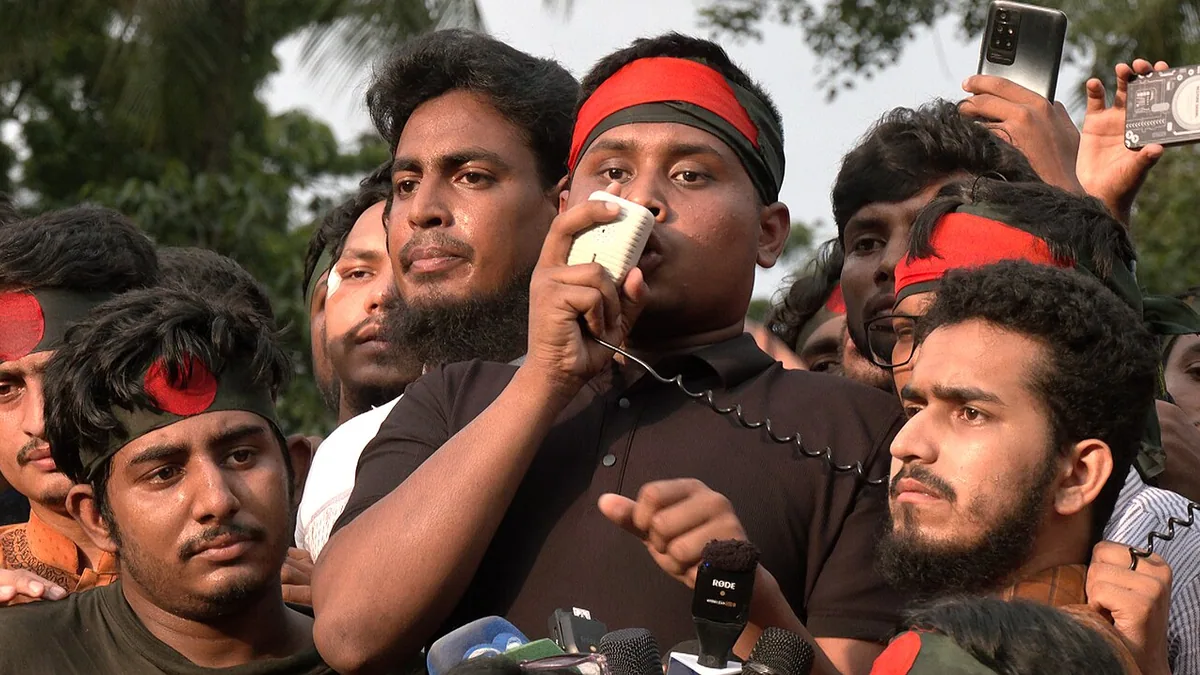
How that should happen is still being debated. On 23 November 2026, the National Citizen Party (NCP) publicly demanded that the constitution reform committee be scrapped, according to a Dhaka Post report.
Why it matters to people in Bangladesh
The constitution decides how state power is exercised, what limits the police and administration work within, how elections are run, and how far rights can be curtailed during an emergency. Claiming a right in court, challenging a law or questioning whether a government decision is lawful all happen inside this framework. That is why the constitution comes up again and again in debates about law, elections and civil liberties.
Key facts
- Adopted by the Constituent Assembly: 4 November 1972
- Came into effect: 16 December 1972
- Form of state: unitary parliamentary republic
- Four fundamental principles: nationalism, socialism, democracy, secularism
- Constituent Assembly: 404 members, drawn from those elected in 1970
- Drafting committee: 34 members, chaired by Dr Kamal Hossain
- Public suggestions received: 98
- Amendments: 17, according to published histories
Related on 24khobor:
What to watch next
How the Constitutional Reform Commission and the National Consensus Commission take their work forward, and whether the process of forming an elected constituent assembly begins. Also worth watching: whether the demand to scrap the reform committee gathers support, and whether further amendments are made. For final and up-to-date wording, read the latest text of the constitution and the announcements of the bodies concerned.